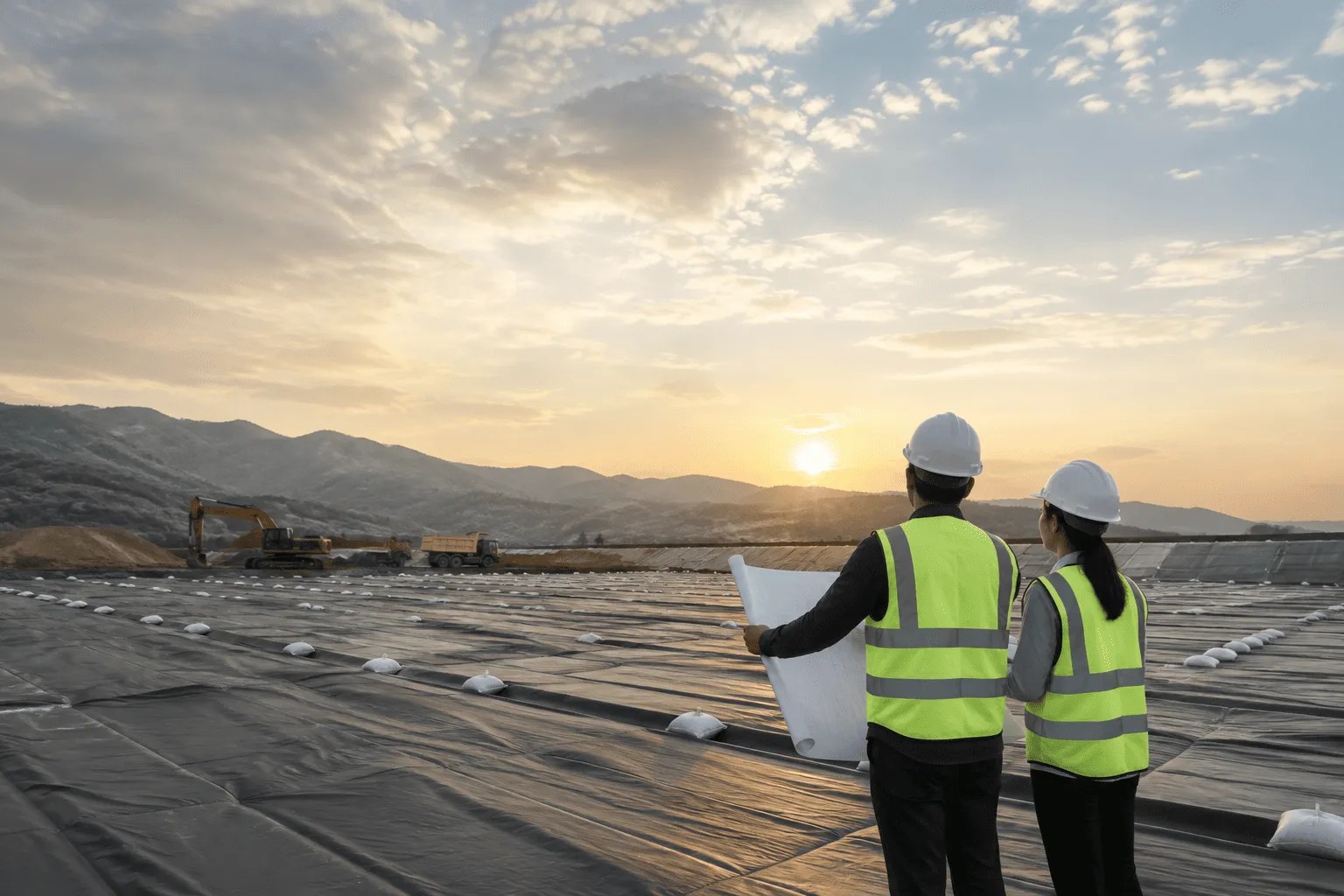
Heap leach areas
Geomembranes form the primary containment layer beneath heap leach areas, helping prevent process solutions from migrating into the underlying ground.
Geosynthetics are used in mining projects to contain process liquids, protect liner systems, separate materials and reinforce ground across extraction, processing and waste-management areas.
Typical applications include heap leach pads, process ponds, tailings facilities, mine water containment, access roads and reinforced earth structures.
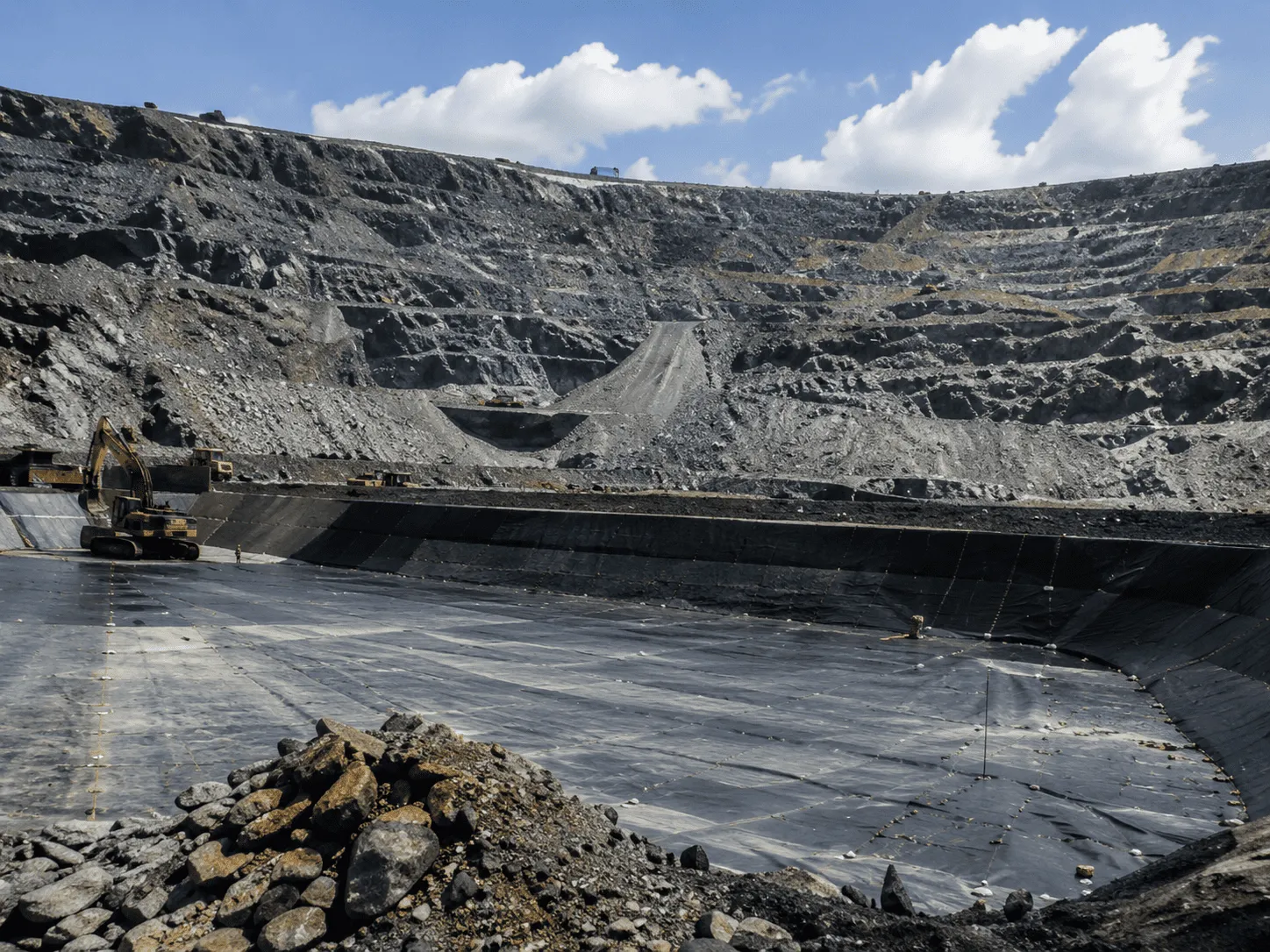
Mining sites use geosynthetics in containment, protection and ground-support systems according to the process, site conditions and required engineering function.
Geomembranes form the primary containment layer beneath heap leach areas, helping prevent process solutions from migrating into the underlying ground.
Geomembranes can line ponds used to collect, store or circulate process liquids associated with mineral recovery operations.
Geomembranes and geotextiles can be incorporated into selected tailings containment and water-management areas where a geosynthetic barrier or protection layer is specified.
Geotextiles can be placed beneath or above geomembranes to reduce puncture risk from prepared ground, aggregate or other adjacent materials.
Geotextiles and geogrids can be used beneath aggregate layers where weak ground requires separation or reinforcement for mine traffic.
HDPE anchor plates provide weldable connection points where HDPE liners meet concrete channels, pits, tanks or other process structures.
Mining projects can require different geosynthetic functions within containment areas, process infrastructure and site-access structures.
Geomembranes form low-permeability barriers that limit the migration of process solutions, mine water and other contained liquids.
Geotextiles provide cushioning around geomembranes where contact with soil, aggregate or construction materials could damage the liner.
Geotextiles help prevent fine subgrade soil from mixing with aggregate in roads, working platforms and other mine infrastructure.
Geogrids can reinforce aggregate and soil layers where mine roads, working platforms or reinforced earth structures are built over weak or variable ground.
Geotextiles allow water to pass while retaining soil particles at drainage and soil interfaces.
HDPE anchor plates provide a weldable interface between HDPE lining systems and cast-in-place concrete structures.
The geosynthetic arrangement varies according to the mining process, contained liquid, ground conditions and the function required at each part of the site.
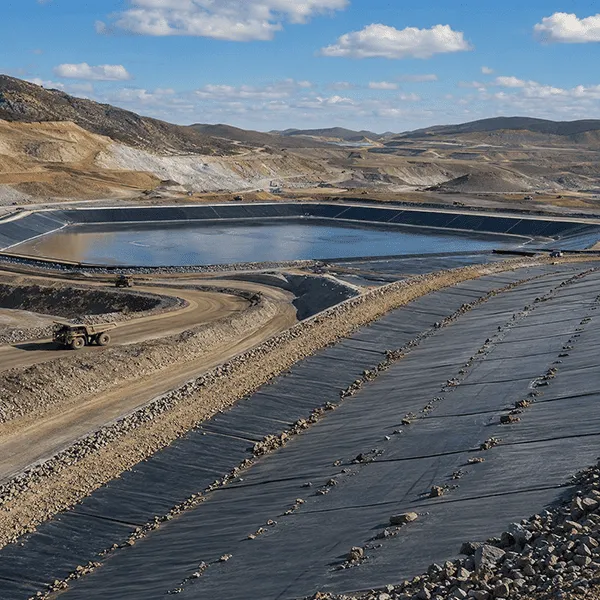
Geomembrane liners are used beneath ore heaps to contain process solutions and direct collected liquid toward the designed recovery system.
Geomembranes can line collection, process and evaporation ponds where mine water or process liquids need to be separated from the surrounding ground.
Geosynthetic liners and protection layers can be incorporated into selected tailings storage or associated water-management structures where required by the project design.
Geomembranes can be used in ponds and basins that collect contact water, runoff or other water requiring controlled storage at the mine site.
Geotextiles and geogrids can support separation and reinforcement beneath haul roads, access roads and temporary working platforms over weak ground.
Geogrids can be incorporated into selected reinforced-soil slopes, embankments and retaining structures within mine infrastructure.
Mining projects may use different geosynthetic materials for containment, liner protection, ground separation, reinforcement and concrete liner connections.
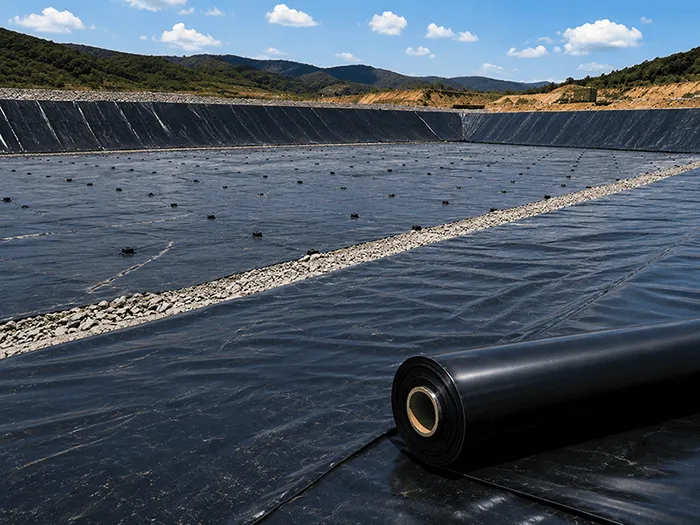
Used as barrier layers in heap leach facilities, process ponds, mine-water basins and selected tailings containment systems.
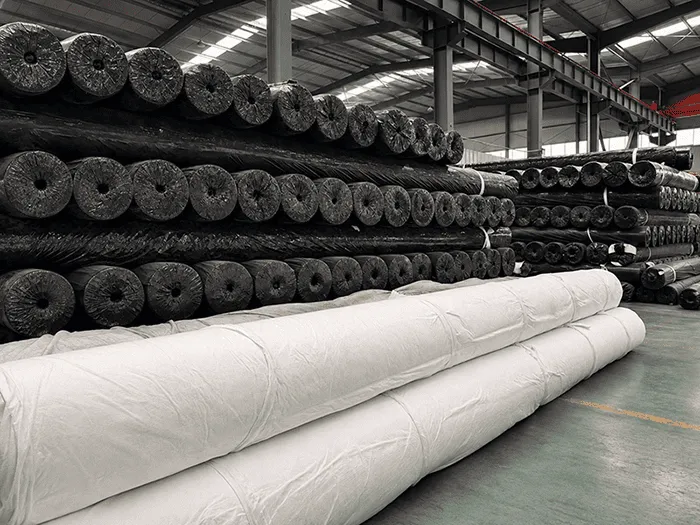
Used for liner protection, separation and filtration around geomembranes, soil and aggregate layers.
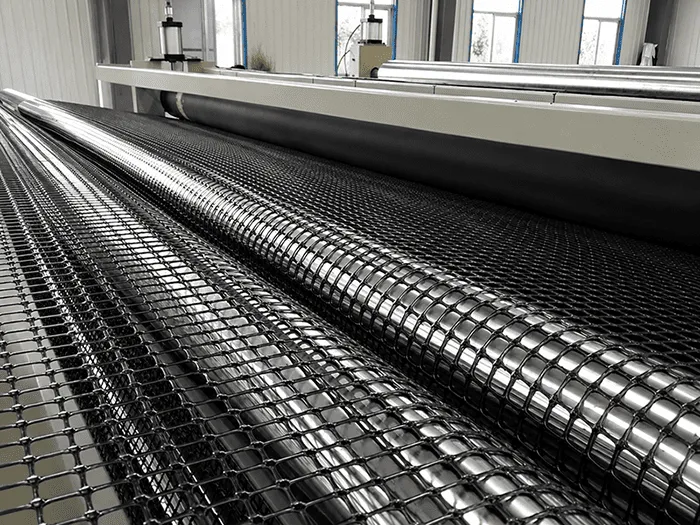
Used for aggregate reinforcement and soil stabilization in mine roads, working platforms and reinforced earth structures.
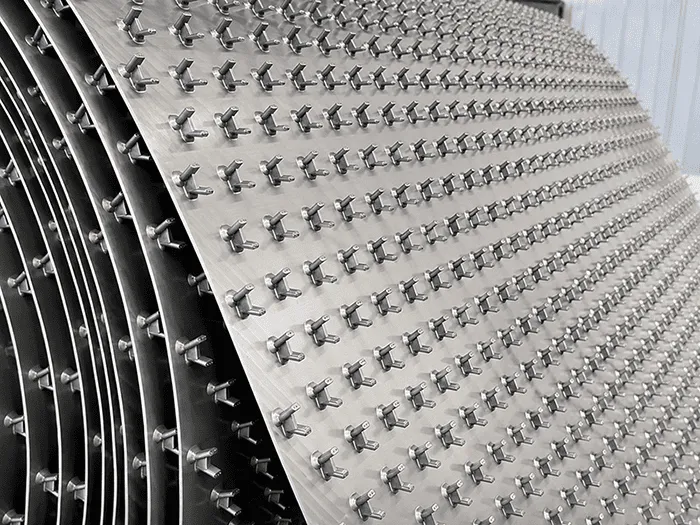
Used to create weldable connection points between HDPE lining systems and concrete process structures.
Mining containment and infrastructure systems often use several geosynthetic materials together, with each product performing a separate barrier, protection or reinforcement function.
The final material arrangement should follow the mine design, contained liquid, ground conditions, loading requirements and applicable project specification.
These details help us review the mining application, required materials, product specifications and order scope.
Mining projects can involve large material quantities and remote delivery locations. Roll configuration, packing and shipment planning should therefore be confirmed after the product specifications, quantities and destination are established.
Roll width, roll length and unit weight depend on the selected product and specification.
Packing is confirmed according to the product type, transport method and agreed buyer requirements.
Roll labels and order identification can be prepared according to the confirmed order requirements.
Container loading should account for roll dimensions, unit weight and the combination of products supplied for the project.
Commercial and shipment documents are prepared according to the confirmed order and agreed export requirements.
Destination port, mine location, required delivery period and shipment requirements should be provided during quotation so transport planning can be discussed in advance.
Send us your product specifications, quantities or project requirements, and our team will prepare a suitable material recommendation and quotation.
Request a quote