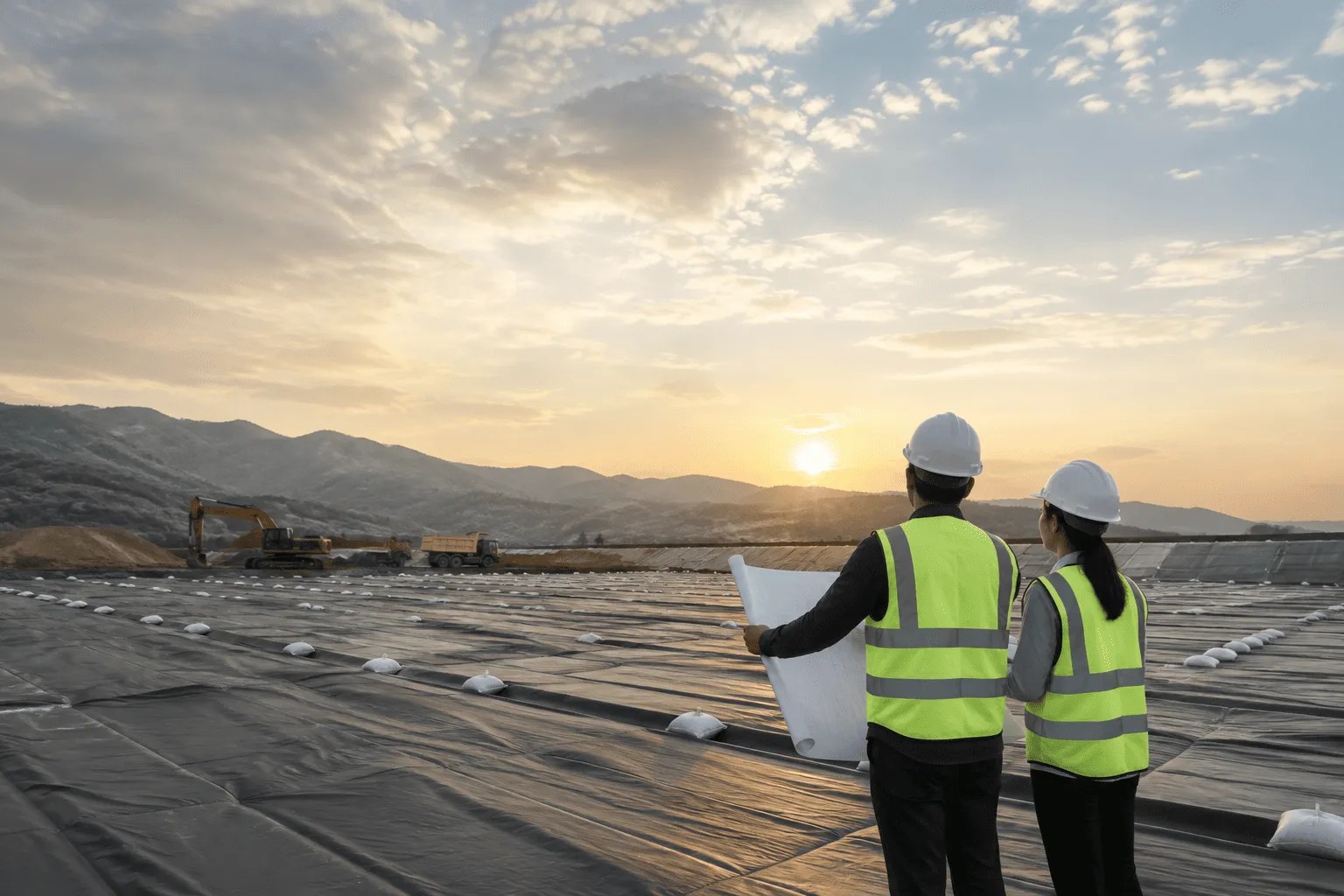
Working platforms
Geotextiles and geogrids can be installed beneath aggregate working platforms where weak or wet subgrade requires separation or reinforcement during construction.
Geosynthetics are used beneath and around buildings to separate soil and aggregate, reinforce weak ground, provide filtration and manage drainage around below-grade structures.
Typical applications include foundation working platforms, floor slabs, basement walls, retaining structures, access areas, drainage zones and selected below-grade barrier systems.
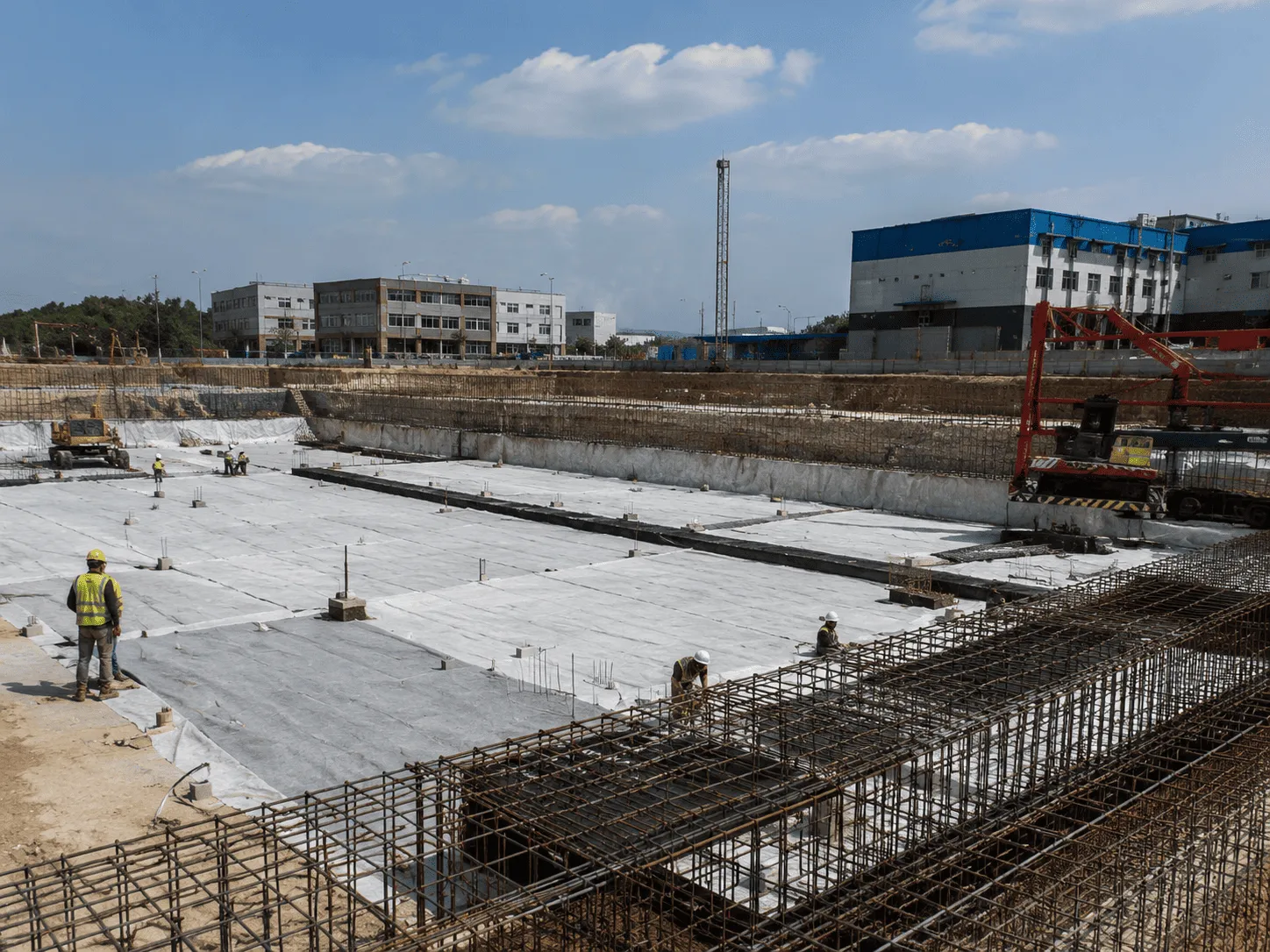
Building and foundation projects use geosynthetics at interfaces between subgrade, aggregate, drainage layers and below-grade structures according to ground conditions and the required engineering function.
Geotextiles and geogrids can be installed beneath aggregate working platforms where weak or wet subgrade requires separation or reinforcement during construction.
Geotextiles can separate prepared subgrade from aggregate or drainage layers beneath selected ground-bearing slabs.
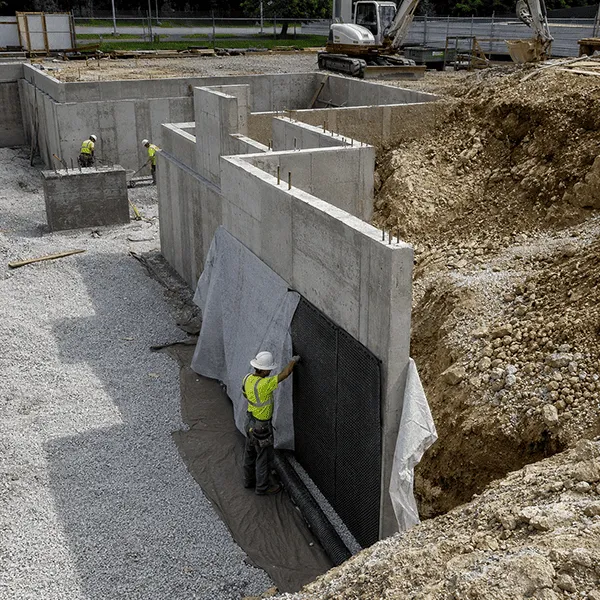
Drainage materials can be installed against below-grade walls to provide a defined path for groundwater or infiltrating water toward the designed collection system.
Geotextiles help prevent fine subgrade soil from migrating into overlying aggregate while maintaining separation between the materials.
Geotextiles and drainage materials can provide filtration and drainage behind retaining walls and other buried concrete structures.
Geomembranes can be incorporated into selected below-grade barrier or containment details where a low-permeability layer is specified by the project design.
Foundation and below-grade systems can require different geosynthetic functions depending on soil conditions, groundwater and structural layout.
Geotextiles help prevent fine soil from mixing with aggregate beneath working platforms, slabs and access areas.
Geogrids can provide tensile reinforcement within aggregate layers where weak or variable ground requires additional construction support.
Geotextiles allow water to pass while retaining soil particles at drainage and aggregate interfaces.
Drainage materials provide pathways for water behind walls or beneath selected below-grade structures.
Geotextiles can maintain separation over weak subgrade, while geogrids can reinforce aggregate layers where additional construction stability is required.
Geomembranes can provide low-permeability barrier layers in selected below-grade or containment applications where specified by the project design.
The material arrangement varies according to foundation type, subgrade condition, groundwater, structural loading and the drainage or barrier requirements of the project.
Geotextiles and geogrids can be installed beneath aggregate platforms used by construction equipment where weak ground requires separation or reinforcement.
Geotextiles can be used beneath selected ground-bearing slabs where separation between prepared subgrade and aggregate or drainage layers is required.
Drainage materials can provide a defined flow path behind below-grade walls where groundwater or infiltrating water needs to be collected and directed away from the structure.
Geotextiles can provide filtration behind retaining structures, while drainage materials can help direct collected water toward the designed outlet.
Geotextiles and geogrids can be used beneath aggregate in access roads, loading areas and temporary construction routes over weak ground.
Geomembranes can be incorporated into selected pits, containment areas or below-grade barrier systems where a low-permeability layer is required.
Building and foundation projects may use different geosynthetic materials for separation, ground reinforcement, filtration, drainage and selected below-grade barrier applications.
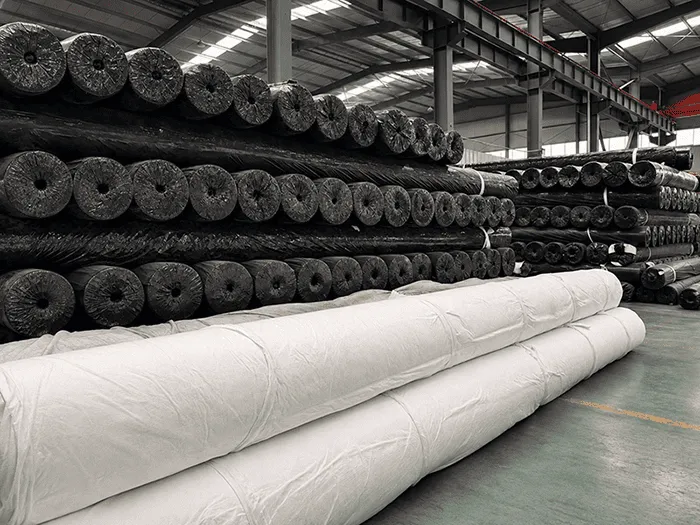
Used for separation, filtration and selected protection functions beneath aggregate and around drainage systems.
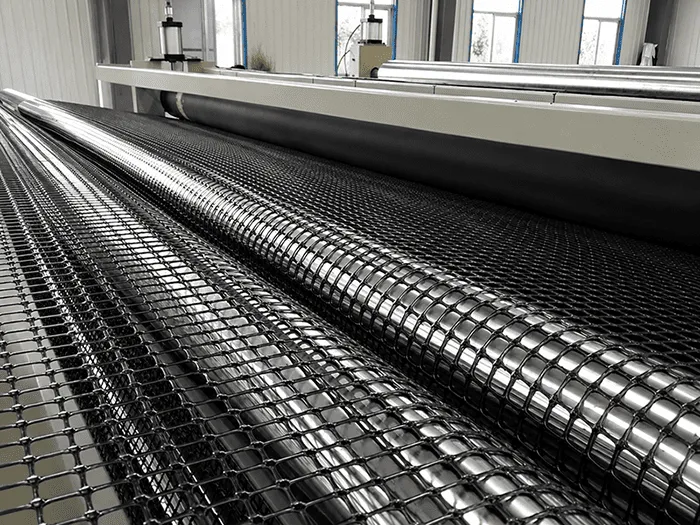
Used to reinforce aggregate and selected soil layers where weak subgrade or construction loading requires additional support.

Used in selected below-grade walls, retaining structures and foundation drainage details where a formed drainage path is required.
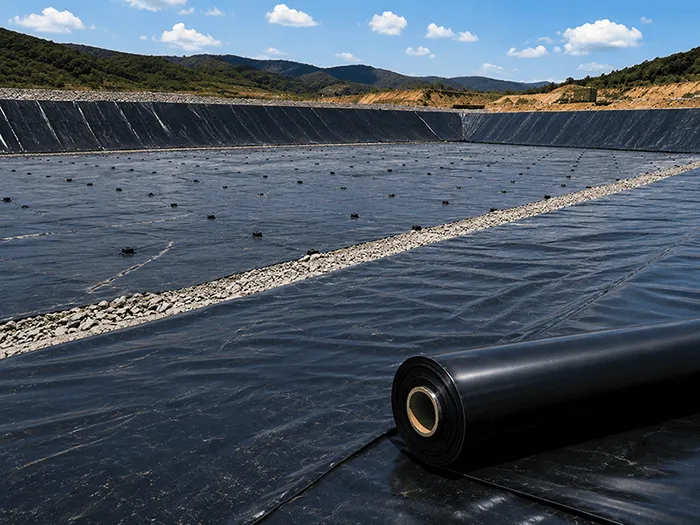
Used as low-permeability barrier layers in selected below-grade and containment applications where specified by the project design.
Building and foundation systems can use several geosynthetic materials together, with each layer serving a separate reinforcement, separation, filtration or drainage function.
The final material arrangement should follow the foundation design, subgrade condition, groundwater, structural loading and applicable project specification.
These details help us review the foundation application, required materials, product specifications and order scope.
Building and foundation projects may require several roll or panel products delivered according to the construction sequence. Product dimensions, packing and shipment planning should be confirmed after the specifications, quantities and delivery schedule are established.
Roll or panel dimensions and unit weight depend on the selected product and specification.
Packing is confirmed according to the product type, transport method and agreed buyer requirements.
Roll labels and order identification can be prepared according to the confirmed order requirements.
Container loading should account for product dimensions, unit weight and the combination of materials supplied for the project.
Commercial and shipment documents are prepared according to the confirmed order and agreed export requirements.
Destination port, project location, required delivery period and construction schedule should be provided during quotation so shipment planning can be discussed in advance.
Send us your product specifications, quantities or project requirements, and our team will prepare a suitable material recommendation and quotation.
Request a quote