
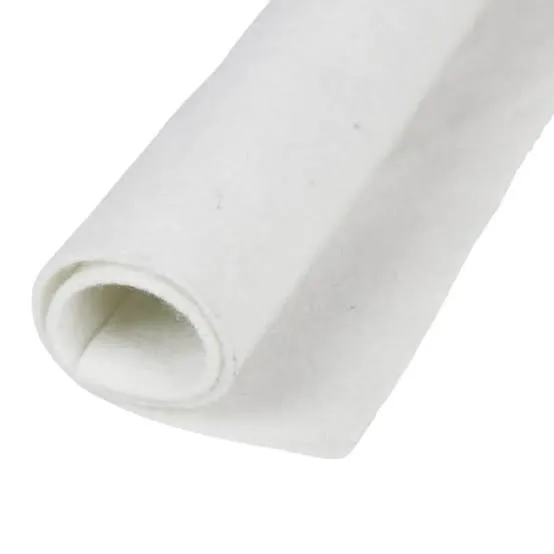
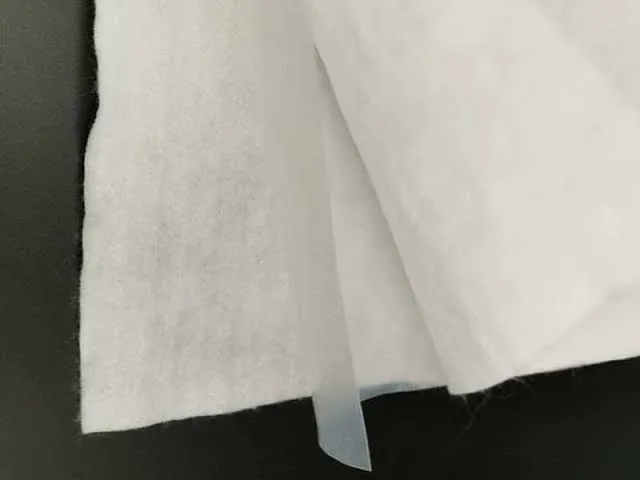
Composite structure
Combines a nonwoven geotextile layer with a geomembrane to provide multiple engineering functions within one product.
Geotextile–geomembrane composite for seepage control, separation and reinforcement in civil and hydraulic engineering projects.
Composite geomembrane combines nonwoven geotextile layers with a polymer geomembrane to provide barrier and geotextile functions within a single composite system.
0104
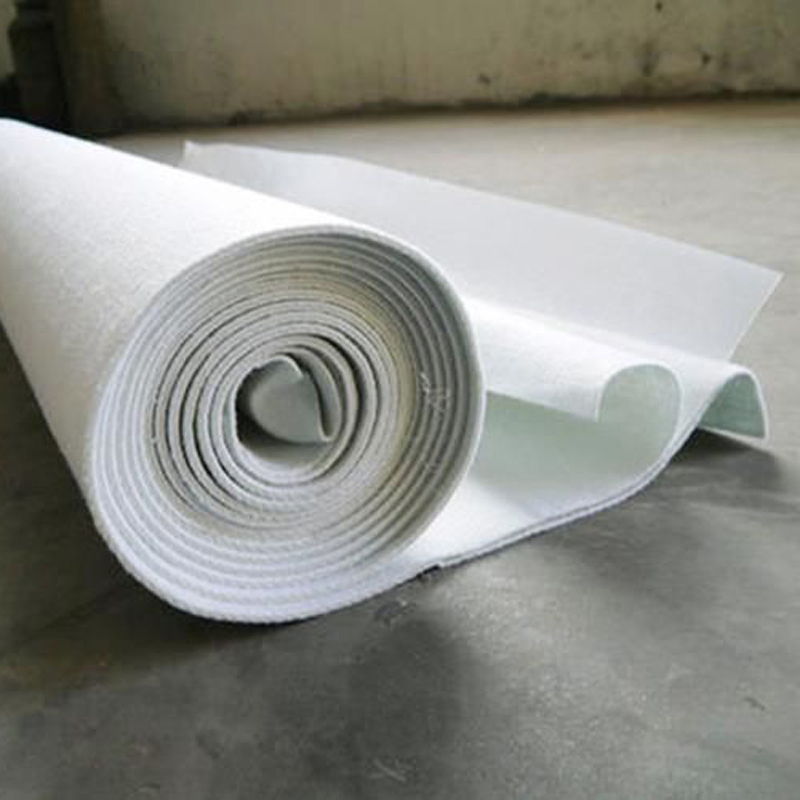
Composite geomembrane is manufactured by combining nonwoven geotextile with a polymer geomembrane layer. Depending on the required structure, the product can be supplied as one geotextile with one geomembrane, two geotextiles with one geomembrane, or multi-layer composite configurations.
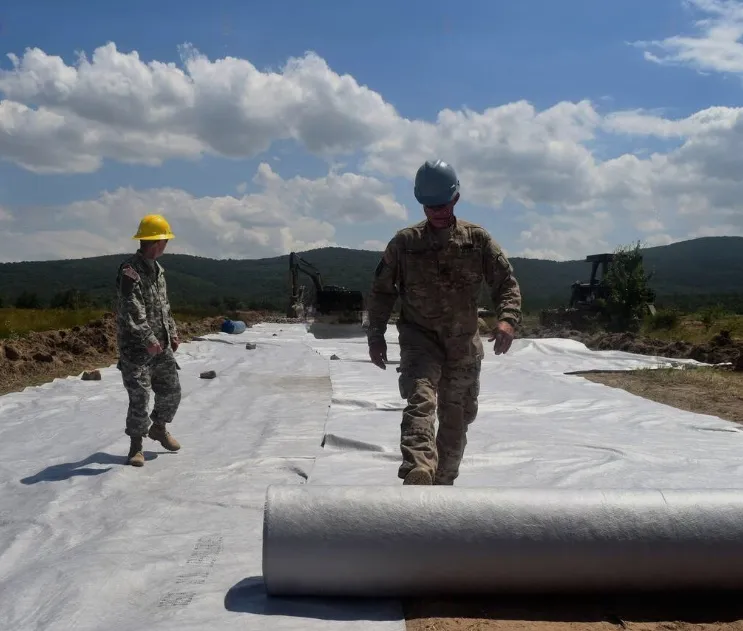
The composite structure combines the seepage-control function of the geomembrane with the separation, protection and reinforcement functions of the geotextile. Typical applications include water-conservancy works, canals, dykes, reservoirs, traffic tunnels and other civil-engineering projects requiring a composite barrier system.
Combines a nonwoven geotextile layer with a geomembrane to provide multiple engineering functions within one product.
The geomembrane component provides the barrier function required for seepage-control applications.
The nonwoven geotextile component provides separation, protection and reinforcement functions around the membrane layer.
Breaking strength, CBR puncture strength and tearing-strength requirements are defined according to the selected nominal strength grade.
Available in one-geotextile, two-geotextile and multi-layer composite configurations for different project requirements.
Technical data reference: customer-provided Composite Geomembrane technical performance table under GB/T 17642-2008.
| Property | Nominal breaking strength — kN/m | |||||||
|---|---|---|---|---|---|---|---|---|
| 5 | 7.5 | 10 | 12 | 14 | 16 | 18 | 20 | |
| MD/CD breaking strength — kN/m | ≥ 5.0 | ≥ 7.5 | ≥ 10.0 | ≥ 12.0 | ≥ 14.0 | ≥ 16.0 | ≥ 18.0 | ≥ 20.0 |
| Elongation corresponding to nominal breaking strength, MD/CD — % | 30–100 | 30–100 | 30–100 | 30–100 | 30–100 | 30–100 | 30–100 | 30–100 |
| CBR puncture strength — kN | ≥ 1.1 | ≥ 1.5 | ≥ 1.9 | ≥ 2.2 | ≥ 2.5 | ≥ 2.8 | ≥ 3.0 | ≥ 3.2 |
| MD/CD tearing strength — kN | ≥ 0.15 | ≥ 0.25 | ≥ 0.32 | ≥ 0.40 | ≥ 0.48 | ≥ 0.56 | ≥ 0.62 | ≥ 0.70 |
| Property | Requirement |
|---|---|
| Static water pressure resistance — MPa | According to the Hydrostatic Pressure table. |
| Peel strength — N/cm | ≥ 6 |
| Vertical permeability coefficient — cm/s | According to project design or contract requirements. |
| Width deviation — % | −1.0 |
| Composite configuration | Geomembrane thickness — mm | |||||||
|---|---|---|---|---|---|---|---|---|
| 0.2 mm | 0.3 mm | 0.4 mm | 0.5 mm | 0.6 mm | 0.7 mm | 0.8 mm | 1.0 mm | |
| One-side geotextile composite | ≥ 0.4 MPa | ≥ 0.5 MPa | ≥ 0.6 MPa | ≥ 0.8 MPa | ≥ 1.0 MPa | ≥ 1.2 MPa | ≥ 1.4 MPa | ≥ 1.6 MPa |
| Two-side geotextile composite | ≥ 0.5 MPa | ≥ 0.6 MPa | ≥ 0.8 MPa | ≥ 1.0 MPa | ≥ 1.2 MPa | ≥ 1.4 MPa | ≥ 1.6 MPa | ≥ 1.8 MPa |
Send us your application, required specification, quantity and delivery destination for product review and quotation.