
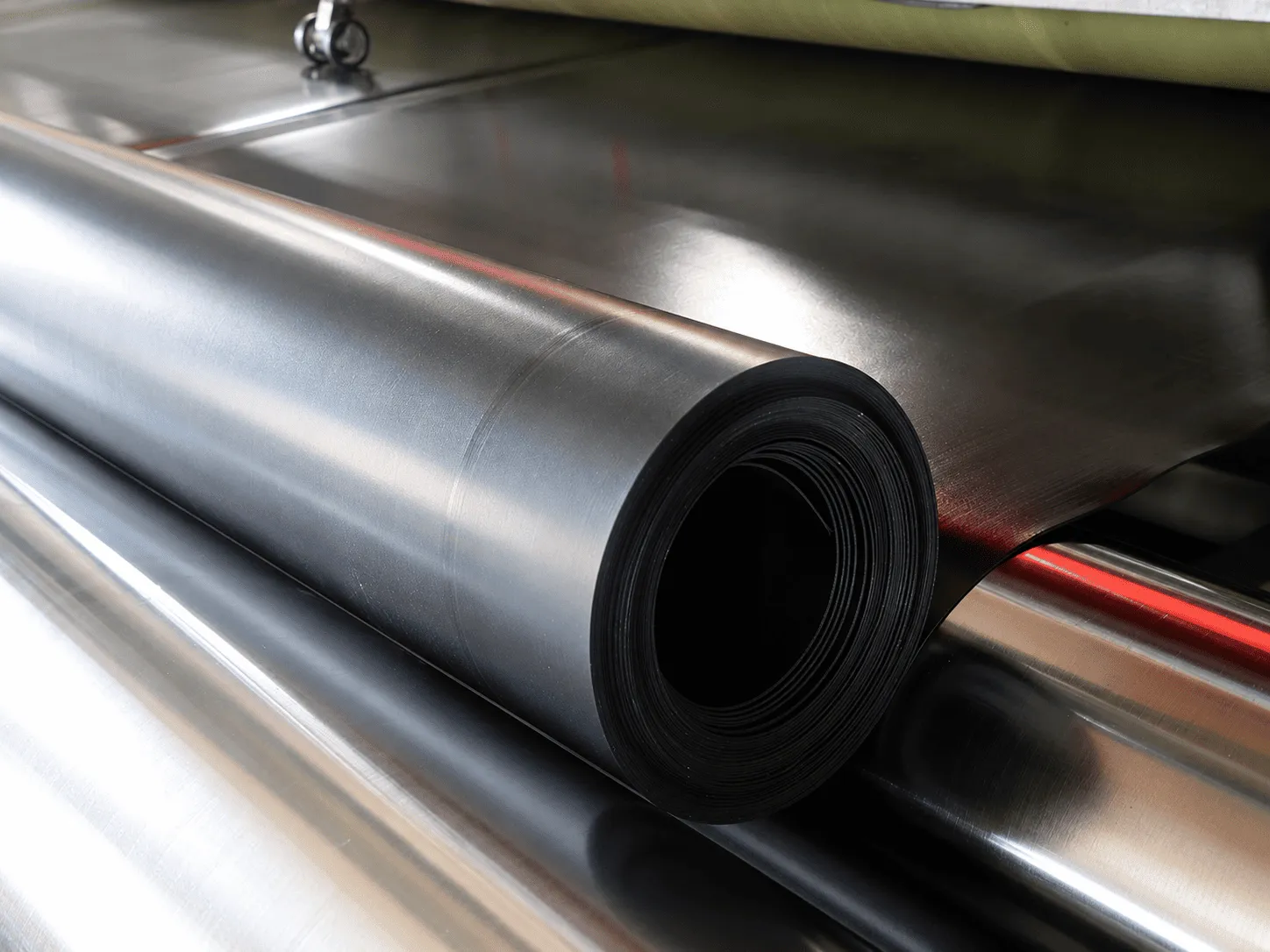
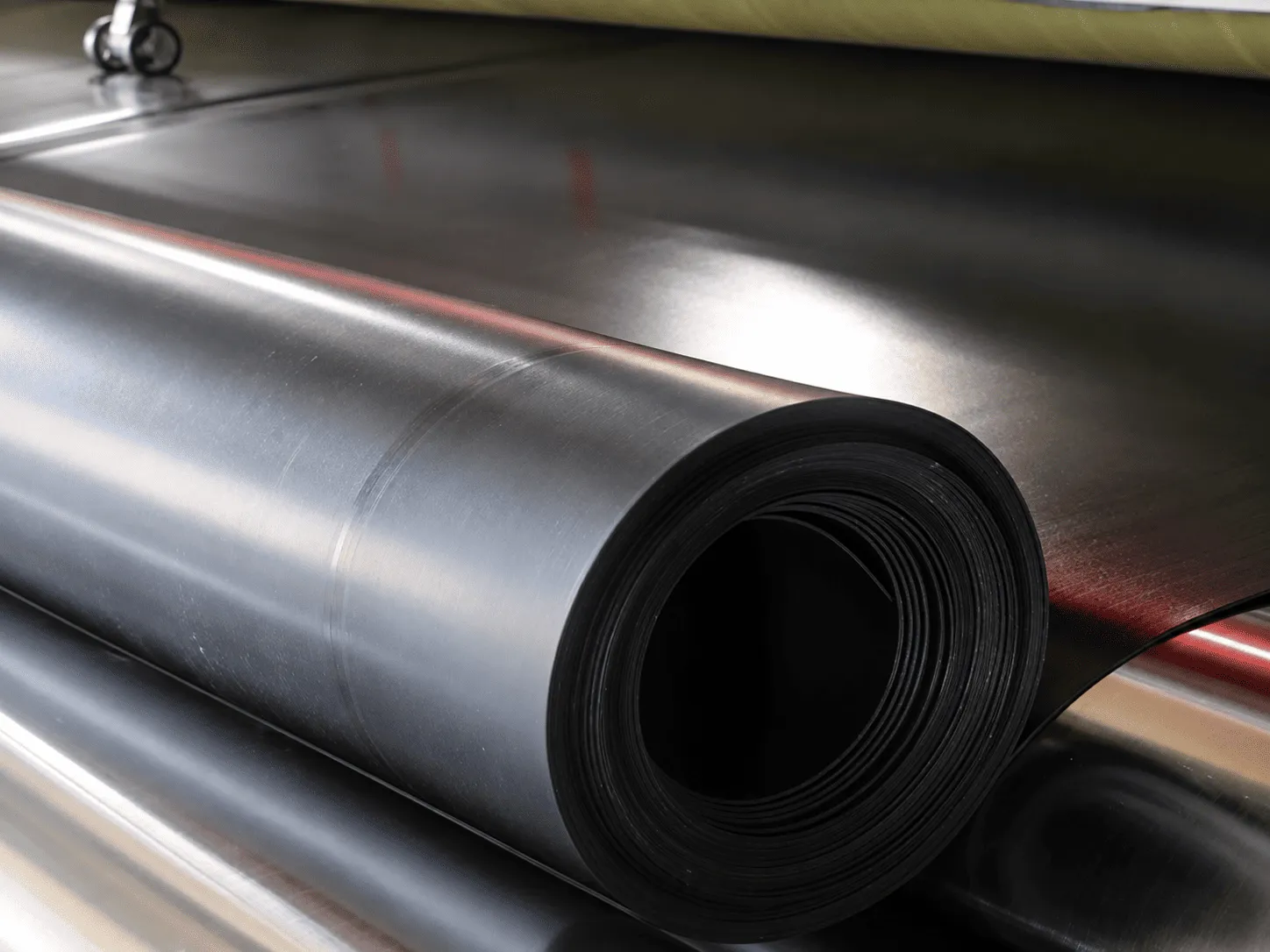
Good flexibility and elongation
The material provides good flexibility and elongation for lining applications.
Low-density polyethylene geomembrane for agricultural water containment and aquaculture lining applications.
Manufactured from LDPE, LLDPE using a blown-film process, GL-1 geomembrane is available in multiple thicknesses and widths to suit project-specific lining requirements.
0104
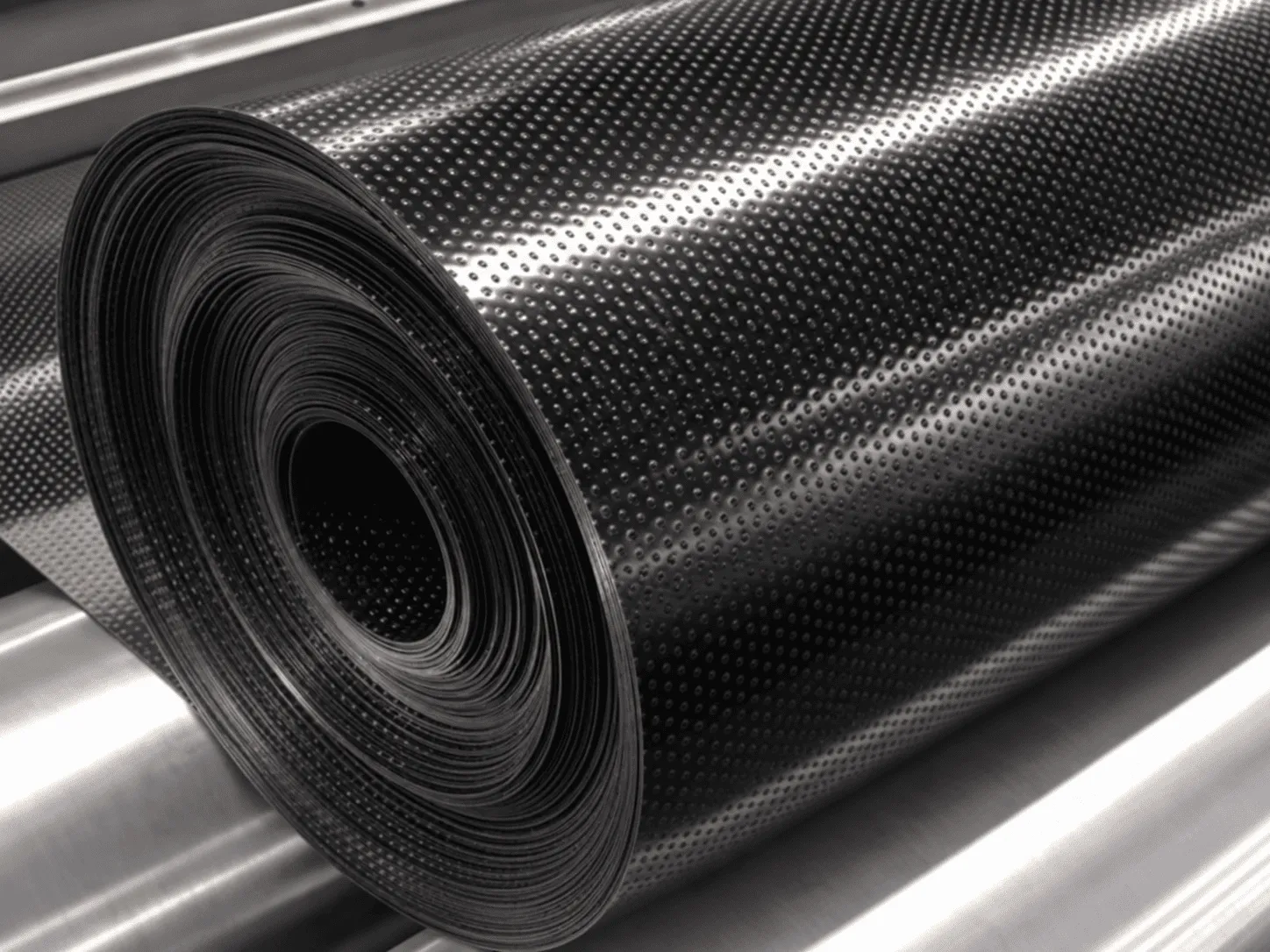
GL-1 is a low-density polyethylene geomembrane manufactured from LDPE, LLDPE using a blown-film production process. It is designed as a flexible lining material for applications requiring water containment and seepage control.
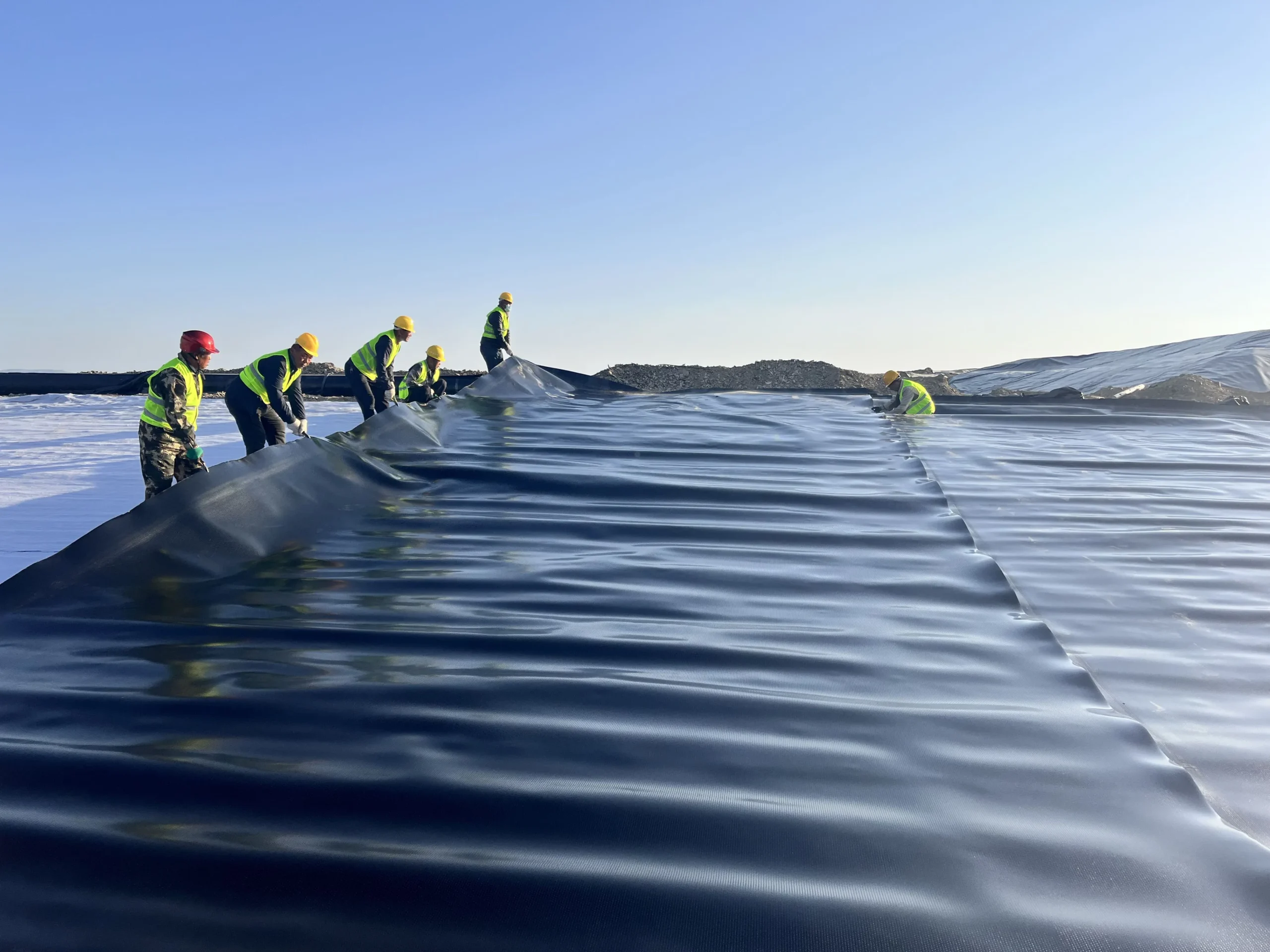
The material is primarily used for seepage control in agricultural water-conservancy projects, including channels and water-storage ponds, as well as aquaculture applications such as fish ponds. It can also be combined with geotextiles to form composite geomembrane systems where required by the project design.
The material provides good flexibility and elongation for lining applications.
The material is described in the product catalogue as having good resistance to low-temperature conditions.
Designed as a geomembrane layer for waterproofing and seepage-control applications.
The membrane can be joined by welding during installation.
Available in thicknesses from 0.1 to 3.0 mm and widths from 2 to 10 m for different project requirements.
Linear Low Density Polyethylene (LLDPE) Geomembrane (Smooth)
SI (Metric) Units
| Property | Test Method | 0.50 mm | 0.75 mm | 1.00 mm | 1.25 mm | 1.50 mm | 2.00 mm | 2.50 mm | 3.00 mm | Testing Frequency |
|---|---|---|---|---|---|---|---|---|---|---|
| Thickness — min. average | D5199 | nom. | nom. | nom. | nom. | nom. | nom. | nom. | nom. | per roll |
| Lowest individual of 10 values | -10% | -10% | -10% | -10% | -10% | -10% | -10% | -10% | ||
| Formulated Density (max.) — g/cc | D1505 / D792 | 0.939 | 0.939 | 0.939 | 0.939 | 0.939 | 0.939 | 0.939 | 0.939 | 90,000 kg |
| Tensile Properties — Break strength (min. ave.) — N/mm | D6693 Type IV | 13 | 20 | 27 | 33 | 40 | 53 | 66 | 80 | 9,000 kg |
| Tensile Properties — Break elongation (min. ave.) — % | 800 | 800 | 800 | 800 | 800 | 800 | 800 | 800 | ||
| 2% Modulus (max.) — N/mm | D5323 | 210 | 315 | 420 | 520 | 630 | 840 | 1050 | 1260 | per formulation |
| Property | Test Method | 0.50 mm | 0.75 mm | 1.00 mm | 1.25 mm | 1.50 mm | 2.00 mm | 2.50 mm | 3.00 mm | Testing Frequency |
|---|---|---|---|---|---|---|---|---|---|---|
| Tear Resistance (min. ave.) — N | D1004 | 50 | 70 | 100 | 120 | 150 | 200 | 250 | 300 | 20,000 kg |
| Puncture Resistance (min. ave.) — N | D4833 | 120 | 190 | 250 | 310 | 370 | 500 | 620 | 750 | 20,000 kg |
| Axi-Symmetric Break Resistance Strain — % (min.) | D5617 | 30 | 30 | 30 | 30 | 30 | 30 | 30 | 30 | per formulation |
| Property | Test Method | 0.50 mm | 0.75 mm | 1.00 mm | 1.25 mm | 1.50 mm | 2.00 mm | 2.50 mm | 3.00 mm | Testing Frequency |
|---|---|---|---|---|---|---|---|---|---|---|
| Carbon Black Content (range) — % | D4218 | 2.0–3.0 | 2.0–3.0 | 2.0–3.0 | 2.0–3.0 | 2.0–3.0 | 2.0–3.0 | 2.0–3.0 | 2.0–3.0 | 20,000 kg |
| Carbon Black Dispersion | D5596 | note (3) | note (3) | note (3) | note (3) | note (3) | note (3) | note (3) | note (3) | 20,000 kg |
| Option A — Standard OIT — min. | D8117 | 100 | 100 | 100 | 100 | 100 | 100 | 100 | 100 | 90,000 kg |
| OR | ||||||||||
| Option B — High Pressure OIT — min. | D5885 | 400 | 400 | 400 | 400 | 400 | 400 | 400 | 400 | |
| Property | Test Method | 0.50 mm | 0.75 mm | 1.00 mm | 1.25 mm | 1.50 mm | 2.00 mm | 2.50 mm | 3.00 mm | Testing Frequency |
|---|---|---|---|---|---|---|---|---|---|---|
| Oven Aging at 85°C Test Method: D5721 | ||||||||||
| Option A — Standard OIT — % retained after 90 days | D8117 | 35 | 35 | 35 | 35 | 35 | 35 | 35 | 35 | per formulation |
| OR | ||||||||||
| Option B — High Pressure OIT — % retained after 90 days | D5885 | 60 | 60 | 60 | 60 | 60 | 60 | 60 | 60 | |
| UV Resistance Test Method: D7238 | ||||||||||
| Option A — Standard OIT | D8117 | N.R. | N.R. | N.R. | N.R. | N.R. | N.R. | N.R. | N.R. | per formulation |
| OR | ||||||||||
| Option B — High Pressure OIT — % retained after 1600 hrs | D5885 | 35 | 35 | 35 | 35 | 35 | 35 | 35 | 35 | |
Send us your application, required specification, quantity and delivery destination for product review and quotation.